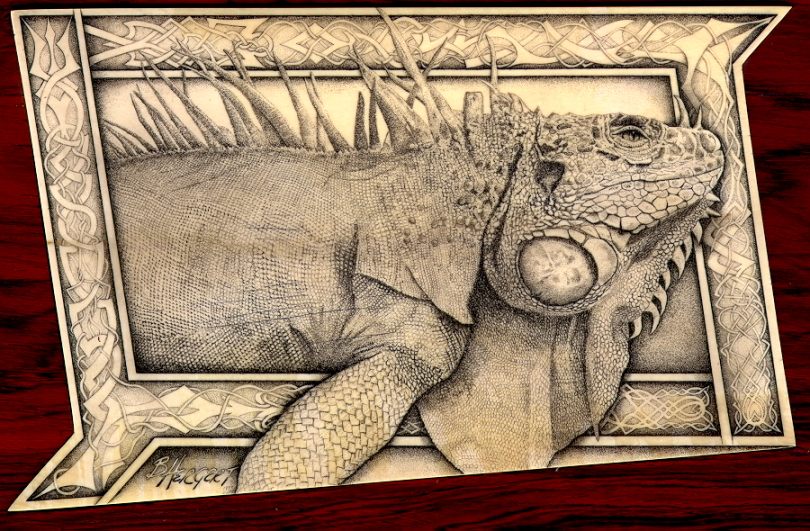

It's been a long time since I've updated this page, so I hope you'll enjoy the new work.

Scrimshaw is the art of incising or cutting designs into bone and ivory. Early whalers used whales' teeth and bone to create their works of art. Eskimos used mammoth and walrus tusks. Today we scrimshanders use woolly mammoth tusk and ivory substitutes like micarta and corian. Well-intentioned, but uninformed activists have practically eliminated the use of antique elephant ivory, though it is still legal to possess that ivory. I don't sell any elephant ivory myself.

Back in 1978 I was selling prints of my pen and ink drawings when a jeweler in Portland suggested I try scrimshaw. He felt it suited my style which was stippling (drawing with dots of ink), and the subject he'd seen - sailing ships. So he cut some ivory cabochons and told me to scratch the polished surface with a needle and rub ink into the scratches. That was all the instruction I got. I'm a slow learner, but over the years I managed to make better scribes to cut microscopic points and lines. I also learned that oil paint offered superior qualities to ink.

The work on this site has been commissioned by collectors. I hope it inspires you and if you are interested in having something done, that you'll be confident that you can expect the same quality in anything you order. So just click on the links below to visit the many pages.
Homepage | Knives | Portraits | Guitars | Guitar Stuff | Cuesticks1 | Cuesticks 2 | Razors | Assorted 1 | Assorted 2 | Assorted 3 | Drawings | Mixed Bag
Click here to visit bobhergert.com or scrimshaw.biz